






















































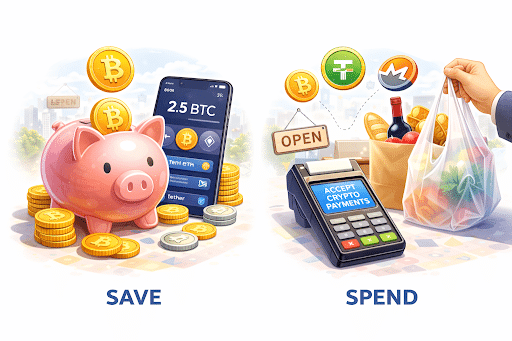
Crypto spending and holding reflect different behaviors, but only spending signals real adoption. It boosts usability, trust, and daily use. In 2026, platforms like CoinsBee instantly turn crypto into real-world value, making spending the smarter move.
- HODLing vs. Spending: What's the Difference?
- The Problem with Measuring Adoption by Holding Alone
- Why Crypto Spending Is a Better Indicator of Adoption
- Real Utility in Action: CoinsBee as a Spending Gateway
- Why CoinsBee Matters in the Shift to Spending
- Adopting Is a Verb, Not a Vision
- সচরাচর জিজ্ঞাসিত প্রশ্নাবলী (FAQs)
For years, crypto holding has been the dominant behavior in the space. Still, in 2026, there’s a clear shift underway: crypto spending is becoming the real signal of adoption, usability, and long-term viability.
At CoinsBee, where users ক্রিপ্টো দিয়ে গিফট কার্ড কিনুন every day, we see this shift in action. Let’s explore why the debate around crypto spending and crypto holding has never been more relevant.
HODLing vs. Spending: What’s the Difference?
Holding—or “HODLing,” as early adopters called it—has long been the go-to strategy during major bull runs, driven by the belief that long-term value would outweigh short-term use. But that mindset is evolving.
In today’s crypto landscape, it’s not just about how much is held, but how often it’s used. Countries with high levels of transaction activity consistently show stronger, more sustainable adoption patterns.
Simply put, real usage tells a more compelling story than passive ownership ever could.
The Problem with Measuring Adoption by Holding Alone
If you’re trying to measure real crypto adoption signals, holding just doesn’t cut it. Think about it: someone could hold thousands in বিটকয়েন অথবা ইথেরিয়াম and never interact with a single product, merchant, or service. That person might believe in the asset’s long-term potential, but they’re not doing anything to strengthen the network or drive real-world crypto use.
In fact, data from on-chain analytics tools shows that a large portion of crypto wallets remain inactive for long stretches. These dormant wallets may look impressive in aggregate, but they don’t reflect daily movement, spending, or trust in the system as a functional means of payment.
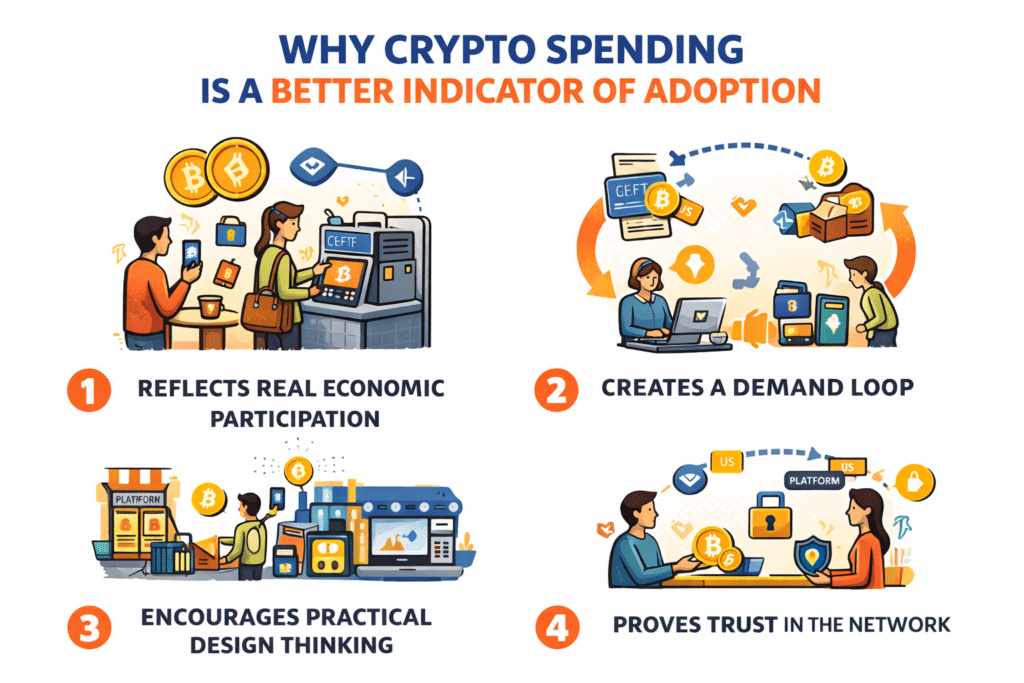
Why Crypto Spending Is a Better Indicator of Adoption
(এআই-জেনারেটেড)
Let’s break it down: spending crypto doesn’t just show that you have coins. It shows you trust the system enough to use them.
Here are four reasons why crypto spending is a stronger signal:
1. It Reflects Real Economic Participation
Spending activates the network. When you use Bitcoin, Ethereum, or স্টেবলকয়েন to pay for services, you’re part of the crypto economic activity that builds a functioning financial alternative.
While holding is passive, everyday crypto transactions are active—they support merchants, increase liquidity, and help define pricing models.
2. It Creates a Demand Loop
When consumers buy gift cards with crypto, they create downstream demand. Brands start noticing. Merchants look into integrations. Infrastructure improves.
Spending fuels the ecosystem. It triggers real demand for payment rails, merchant tools, wallets, and stablecoin systems, making crypto more usable for everyone.
3. It Encourages Practical Design Thinking
DeFi, NFTs, and tokenized assets are great, but usability has to come first. Spending pushes developers and platforms to prioritize UX, speed, fees, and stability.
Platforms like CoinsBee play a key role by turning abstract assets into tangible value. Want to buy groceries, play Xbox, activate, or book a hotel? Crypto can now do that, and that’s only possible when real people spend it.
4. It Proves Trust in the Network
Volatility is a given in crypto. When users still choose to spend—knowing prices may rise or fall—it shows a deeper confidence: that crypto is not just an investment, but a currency.
Real Utility in Action: CoinsBee as a Spending Gateway
CoinsBee is one of the few platforms that truly enables real-world crypto use. With access to over 5,000 global brands, users can instantly convert crypto into real goods and services.
Here’s how CoinsBee users are spending in 2026:
- বিনোদন: Netflix, Spotify, YouTube TV;
- গেমিং: Steam, Xbox, PlayStation;
- Retail: Amazon, Zalando, Decathlon;
- ভ্রমণ: Uber, Airbnb, FlixBus;
- Essentials: ক্যারেফোর, Deliveroo, গুগল প্লে, iTunes.
And thanks to the flexibility of gift cards, users can shop privately without sharing credit card information or bank details.
Why CoinsBee Matters in the Shift to Spending
Without practical platforms like CoinsBee, most crypto holders wouldn’t know where to start. CoinsBee makes it possible to buy gift cards with crypto in just a few clicks, turning any wallet into a spending tool.
Benefits of using CoinsBee include:
- Support for 200+ ক্রিপ্টোকারেন্সি দিয়ে, সহ বিটিসি, ETH, USDT, XMR, এবং আরও;
- Instant delivery of gift cards with no registration required;
- A global network of brands, covering everything from food delivery to fashion;
- No KYC for most services, offering privacy and simplicity.
As more users embrace spending, platforms like CoinsBee help turn digital assets into everyday freedom.
Adopting Is a Verb, Not a Vision
Choosing between crypto spending and crypto holding is not a question of right or wrong. It is a question of relevance. Holding reflects belief in crypto’s long-term potential, but spending shows that crypto has practical value right now.
In a fast-moving market where adoption must be visible, spending crypto benefits everyone: the user, the merchant, the ecosystem, and the currency itself.
So, while it’s fine to keep HODLing, ask yourself: what are you doing to support the ecosystem you believe in? Try spending. And if you’re not sure where to begin, start with কয়েনবি, where turning your crypto into real-world value is fast, easy, and secure.
সচরাচর জিজ্ঞাসিত প্রশ্নাবলী (FAQs)
1. What’s the difference between crypto spending and crypto holding?
Crypto spending means using digital assets for real-world transactions, such as buying gift cards or services. Crypto holding refers to keeping assets without using them, often for long-term investment.
2. Why is crypto spending a better signal of adoption than holding?
Spending shows trust, usability, and active participation in the crypto economy. Holding is passive, but spending helps grow the ecosystem by supporting merchants and increasing real-world usage.
3. How does spending crypto support the ecosystem?
Spending crypto activates demand loops, drives merchant adoption, and improves infrastructure. It encourages developers to prioritize usability, speed, and low fees, making crypto more practical for everyday use.
4. Where can I spend crypto in 2026?
Platforms like CoinsBee allow users to spend crypto instantly on brands like Amazon, Netflix, Carrefour, and Uber by converting coins into gift cards—no registration or KYC required for most services.
5. Can I still hold crypto while using some for spending?
Yes. Many users choose a hybrid approach: holding a portion for long-term gains while spending a portion to benefit from crypto’s practical use in everyday life, boosting both personal utility and ecosystem health.